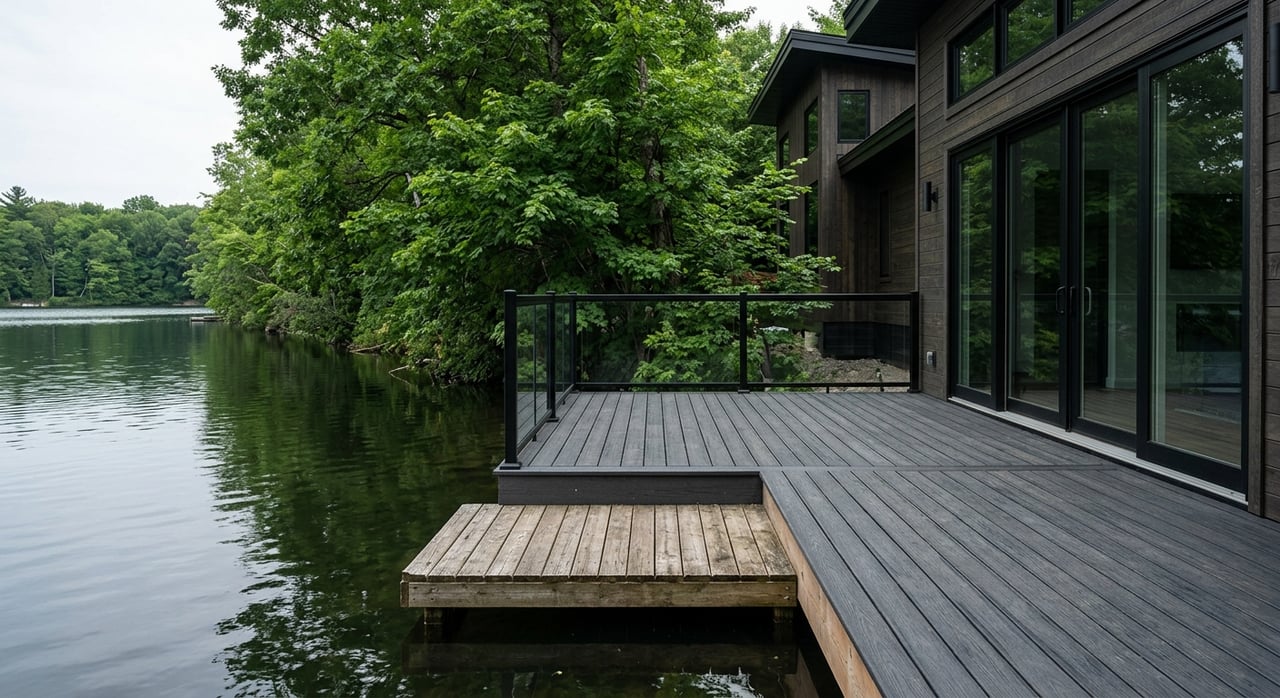
Dreaming about waking up to water views in Granite Falls? Lakefront property here can be a great fit, but not every “waterfront” listing offers the same lifestyle, costs, or rights. If you are thinking about buying on Lake Hickory or Lake Rhodhiss, this guide will help you spot the details that matter most before you make an offer. Let’s dive in.
Understand the Granite Falls lakefront market
Granite Falls sits in a balanced to somewhat competitive market, which means you may have room to think carefully, but well-priced homes can still move fast. Recent market snapshots show median pricing can vary depending on the source and time frame, with figures ranging from about $350,000 in median listing price to $475,000 in median sale price, and homes often selling in roughly 56 to 72 days.
For waterfront property, the range is especially wide. Current examples around Granite Falls run from around $65,000 for a waterview lot with a septic permit on file, to about $75,000 for a non-dockable lot, to roughly $299,900 for a dockable Lake Rhodhiss lot, and up to luxury pricing above $1.8 million for a Lake Hickory home with a private dock. In other words, the biggest pricing drivers are often dockability, lake location, utilities, permits, and whether you are buying land or a finished home.
Know which lake you are buying on
Lake Hickory and Lake Rhodhiss differ
One of the biggest mistakes buyers make is assuming a Granite Falls address means the same lake experience everywhere. In reality, inventory in this area is split mainly between Lake Hickory and Lake Rhodhiss, and that difference can affect everything from dock rights to boating patterns.
Some Lake Rhodhiss properties offer shared amenities like a community floating dock plus kayak and paddleboard launch areas. Others may be non-dockable because of conservation restrictions along the shoreline. On Lake Hickory, some homes include private dock features, such as a boat lift, plus installed utilities that may make the property easier to use right away.
The lake experience can change by property
You are not just buying “on the water.” You may be buying one of several different setups, such as:
- A private dockable home site
- A lakefront property with community dock access
- A waterview lot with no direct dock rights
- A non-dockable shoreline parcel
That is why it is smart to confirm the exact waterbody first, then ask what kind of access comes with the property. Two listings with similar photos may offer very different real-world use.
Ask about dock rights early
Dockability matters more than many buyers expect
If your goal is to keep a boat at your property, dockability should be one of your first questions, not one of your last. In Granite Falls, some waterfront lots are clearly marketed as dockable, while others are restricted by conservation areas or shoreline rules that make private docks impossible.
That difference can have a major effect on value. A home with private dock rights may appeal to a very different buyer than a property that only offers water views or shared access.
Shoreline permits are a key due diligence item
On Lake Hickory, Duke Energy says buyers should contact Lake Services before building or modifying docks, piers, dredging, or shoreline stabilization. Duke also provides guidance for transferring permits into a new owner’s name and obtaining prior permits tied to a property.
For you as a buyer, that means permit paperwork should be reviewed before closing. If a seller says a dock is permitted, ask for the documentation and verify what can legally stay, transfer, or be changed after purchase.
Check boating access and no-wake rules
A lakefront address does not automatically mean easy boating. The location of the lot, nearby ramps, bridge areas, and current water-safety rules can all shape how convenient the property feels once you own it.
The North Carolina Wildlife Resources Commission notes that the Conley Creek Boating Access Area in Granite Falls includes a boat ramp and fishing pier. It also defines no-wake speed as idle speed that creates no appreciable wake, and says vessels should operate at no-wake speed within 50 yards of a boating access area.
Recent materials also show active no-wake proposals on parts of Lake Hickory near bridge corridors. That means noise levels, wake exposure, and boating patterns can vary a lot from one shoreline to another. Before you buy, make sure the dock or shoreline location matches how you actually want to use the lake.
Understand utilities and septic before you fall in love
Septic can shape what you can build
If you are buying a waterfront lot in Granite Falls, septic due diligence is essential. Caldwell County Environmental Health handles septic permitting, and the county says lots are evaluated first. Once approved, a Septic Improvement Permit and Authorization to Construct are issued before building permits can move forward.
That means the lot’s soil, layout, and intended bedroom count all matter. A beautiful lot may not support the home size you have in mind, so it is important to get septic details in writing early.
Utility setups vary from one listing to the next
Granite Falls lake properties do not all use the same utility setup. Some lots may have public water available with a tap fee. Others may require a private well and septic system. Some existing homes already have county water, city water, or septic installed.
This mix can affect both your upfront costs and your timeline. If you are buying land, ask what is already in place, what still needs approval, and what those steps could mean for construction and financing.
Review flood risk before making an offer
Flood due diligence is one of the most important steps in any waterfront purchase. FEMA explains that flood maps show how a property relates to high-risk flood areas, and those map boundaries do not necessarily follow city limits or property lines.
If a parcel is in a Special Flood Hazard Area, flood insurance may be required for federally regulated loans. Lenders may also require flood insurance in some moderate-risk areas. The practical takeaway is simple: check the exact flood zone and request an insurance quote early, before you get too far into the process.
Match the financing to the property type
Waterfront financing in Granite Falls can look different depending on what you are buying. A finished home with established utilities may fit a more familiar path than a raw lot that still needs septic approval, water access, and construction planning.
Current local listings show some waterfront lots allowing terms such as cash, construction-perm loan, or conventional financing. That is a good reminder that not every lake property works like a standard resale home. If you are considering land, talk through the property type and improvements with your lender as early as possible.
Read HOA and POA documents carefully
Some Granite Falls lakefront communities include HOA or POA dues, private-maintained roads, architectural review requirements, or special assessments. Recent examples in the market include annual dues around $1,025 in one community and $600 plus a $500 special assessment in another.
Those costs and rules are not necessarily deal-breakers, but they should be part of your full budget and decision-making process. Ask for community documents before you schedule showings or write an offer so you can compare properties on equal footing.
Use this Granite Falls lakefront checklist
Before you move forward on a lakefront home or lot, make sure you confirm the basics:
- Verify whether the property is on Lake Hickory or Lake Rhodhiss
- Ask if it is dockable, community-access only, or non-dockable
- Request septic records, permit status, and allowed bedroom count
- Confirm whether water service is city, county, public with tap fee, or private well
- Check the flood zone and get an insurance quote early
- Review dock permits, shoreline permits, surveys, and deed restrictions
- Ask for HOA or POA documents, dues, and any current assessments
- Confirm nearby boating access points and any no-wake restrictions
Why local guidance matters with lake property
Lakefront buying is more detailed than a typical home purchase because so much of the value comes from features that are not obvious in photos. The shoreline, permits, utility setup, flood status, and community rules can all affect how you use the property and what it costs to own.
That is where local market knowledge can save you time and stress. When you work with an agent who knows Granite Falls, Lake Hickory, and Lake Rhodhiss, you are better positioned to ask the right questions, compare options clearly, and negotiate with confidence.
If you are thinking about buying lakefront property in Granite Falls, Stephen Kue can help you evaluate the details that matter and guide you through the process with clear, local advice.
FAQs
What should you check before buying lakefront property in Granite Falls?
- Confirm the lake, dockability, septic status, water source, flood zone, permit history, boating access, and any HOA or POA rules before making an offer.
What is the difference between Lake Hickory and Lake Rhodhiss in Granite Falls?
- The two lakes can offer different access, dock situations, shoreline restrictions, and community setups, so you should verify the specific waterbody for any property you consider.
Can every waterfront lot in Granite Falls have a private dock?
- No. Some lots are dockable, some only offer shared water access, and some are non-dockable because of shoreline restrictions or conservation areas.
Why does septic matter when buying a Granite Falls waterfront lot?
- Septic approval affects whether you can build, how large the home can be, and how the lot can be used, so permit status and bedroom-count assumptions should be confirmed early.
Do Granite Falls lakefront homes always require flood insurance?
- Not always, but some properties in higher-risk flood areas may require it for certain loans, and lenders may still require coverage in some moderate-risk areas.
Can you finance vacant waterfront land in Granite Falls like a regular house?
- Not always. Some lots may work with conventional financing, while others may need cash or a construction-perm loan depending on the property’s condition and utility status.