Trying to decide between a brand-new home and an older resale in Statesville? You are not alone, and the answer is not as simple as “new costs more” or “resale is the better deal.” If you are weighing budget, location, condition, and timeline, the right choice comes down to how you want to live and what tradeoffs fit your goals. Let’s break down what matters most in Statesville so you can compare both paths with more confidence.
Statesville Home Prices Today
If you start with price, the first thing to know is that Statesville gives you options on both sides of the market. Redfin’s March 2026 data shows a median sale price of $315,000 in the city, while Realtor.com reports a median listing price of $339,450 with 676 homes for sale. Homes were selling in about 52 days on average, which points to a market where buyers still have room to compare choices carefully.
Countywide pricing trends run a bit higher, but they also vary by source and timing. Realtor.com puts Iredell County’s median listing price around $410,300, while Zillow shows a February 2026 median sale price of $386,100 and a March 2026 median list price of $425,000. The practical takeaway is simple: Statesville can still offer a more accessible entry point than the broader county market.
New Construction in Statesville
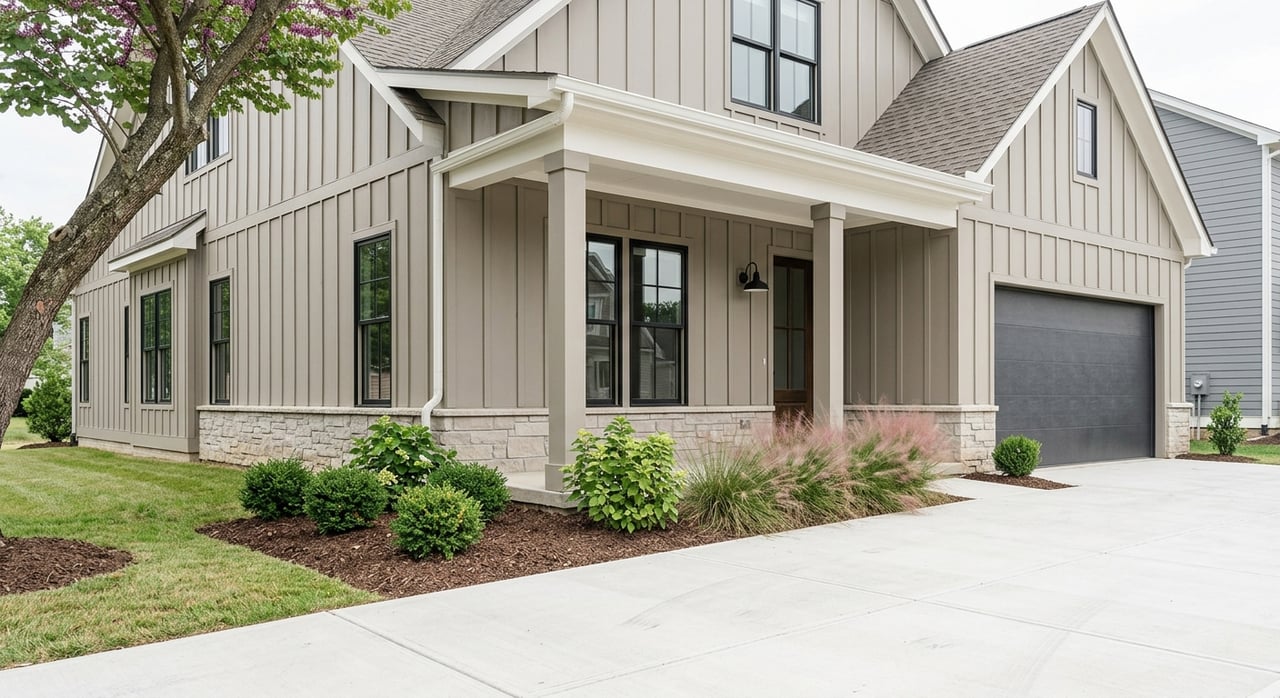
One of the biggest surprises for buyers is that new construction in Statesville does not automatically sit far above resale pricing. Several active builder communities overlap with the city’s resale median, especially in the high $200,000s to mid $300,000s. That makes new construction a real option for buyers who want newer systems, builder amenities, and a more predictable starting point for homeownership.
Most active new-home communities are clustered in the 28677 and 28625 areas, often near I-77, I-40, Troutman, Lake Norman, or the Highway 21 and 115 corridors. These communities tend to offer newer floor plans, a mix of move-in-ready and to-be-built homes, and neighborhood amenities that are less common in older housing areas.
Common New Construction Price Bands
Here is how current new construction generally breaks down in Statesville:
- Entry-level to lower mid-market: high $200,000s to mid $300,000s
- Mid-market: low to mid $300,000s
- Move-up new construction: high $400,000s and up
That wide spread matters because it means your comparison should not be “new versus resale” in the abstract. It should be specific to the home style, neighborhood setting, monthly payment, and features you want.
Examples of Active New Communities
Several current communities help show what buyers are seeing in the market right now:
- Sullivan Farm: roughly $290,000 to $395,000, with move-in-ready homes advertised from about $289,999 to $358,999
- Wallace Springs: roughly $322,000 to $427,000, with move-in-ready inventory around $359,000 to $389,000
- Bristol Terrace: about $299,000 to $345,000
- Beaver Creek: from the low $300,000s
- Hidden Lakes: from the low $300,000s
- Swann Hills: around $459,900 to $517,400 for move-in-ready homes
Some of these communities include features like pools, playgrounds, trails, cabanas, pickleball, green space, or smart-home features. Those amenities can add value for some buyers, especially if you want neighborhood conveniences built into your purchase decision.
What Resale Homes Offer
Resale homes in Statesville bring a different kind of value. If you are drawn to established settings, older architecture, central location, or the possibility of renovation, resale may be the better fit. Statesville’s downtown and historic areas are the clearest examples of that appeal.
The City of Statesville identifies several historic-district neighborhoods around the central business district, including Academy Hill, Mitchell College, East Broad Street/Davie Avenue, and South Race Street. These are long-established residential areas with significant older housing stock, and they offer a very different feel from a newer subdivision.
Historic and Downtown Appeal
For some buyers, the biggest resale advantage is character. Downtown Statesville describes its core as a mixed-use historic business district with more than 350 shops, restaurants, services, professionals, businesses, and organizations. The downtown area is also described as pedestrian-friendly, which can be a major draw if you want a more central, connected setting.
The city’s historic districts also vary in size and housing inventory. Academy Hill includes 45 buildings, Mitchell College contains 166 structures, East Broad Street/Davie Avenue has 76 historic properties, and South Race Street includes 122 homes along with a church and stores. For buyers who want an older-town feel, those areas offer options that new construction usually cannot replicate.
What to Watch With Older Homes
The tradeoff is that older homes often require more due diligence. A resale inspection usually plays a central role in the purchase, and North Carolina law requires a written inspection report from a licensed home inspector. State standards show inspectors examine structural components, roofing, plumbing, electrical, heating, air conditioning, insulation, ventilation, and other major systems.
If the property is in a local historic district, future exterior changes may involve extra oversight. The city requires property owners in local historic districts to follow design standards, obtain a Certificate of Appropriateness, and secure any required building permits before starting exterior work. So if you love the look of a historic home, make sure you also understand the rules that come with it.
Comparing Timeline and Flexibility
Your timeline can be the deciding factor between new construction and resale. If you need to move sooner, resale often has the edge because the home already exists and the transaction is usually more straightforward. That can be especially important if you are coordinating a job move, a lease ending, or the sale of your current home.
With new construction, your timeline depends on whether the home is already complete, nearly finished, or still to be built. Move-in-ready builder homes can allow a faster closing, but they may offer fewer chances to select finishes or customize features. A to-be-built home gives you more influence over the final product, but it usually requires more patience.
Financing, Inspections, and Warranty Differences
New construction and resale also differ in how protection and risk show up during the transaction. With new construction, buyers should still make the purchase contingent on financing and a satisfactory inspection. Buyers should also know they do not have to use a builder’s affiliated lender and can shop around for a better loan offer.
Builder deposits can also come into play if the home is not yet built. In addition, new homes often come with builder warranties that may cover workmanship and materials for one year, systems such as HVAC, plumbing, and electrical for two years, and major structural defects for up to 10 years in some cases. That warranty structure is one reason some buyers prefer a brand-new home.
New construction can also involve a final completion step before closing or occupancy. Depending on the loan and the property, the home may need a final inspection or to be 100 percent complete before the transaction moves forward. That is another reason buyers should pay close attention to timing.
For resale, the inspection process tends to be more central because the home has already been lived in and may show age-related wear. That does not mean resale is a bad choice. It just means you should expect the inspection to be one of the most important parts of your decision.
Which Choice Fits You Best?
The best choice in Statesville depends on what matters most to you day to day. If you want newer systems, fewer immediate repairs, neighborhood amenities, and warranty coverage, new construction may feel like the easier ownership start. In Statesville, that often means looking closely at communities in the 28677 and 28625 corridors and comparing builder incentives, floor plans, and delivery timelines.
If you want established surroundings, architectural character, central location, or the chance to close sooner, resale may be the better path. Statesville’s downtown and historic areas stand out most for buyers who care about those features. Just be ready for more inspection scrutiny and, in historic districts, more rules around exterior changes.
A Simple Comparison Rule
If you are stuck, use this practical framework:
- Choose new construction if the monthly payment still works after incentives, you value builder warranty coverage, and your timeline can absorb construction or completion steps.
- Choose resale if you want faster occupancy, more character, or a downtown or historic-area location, and you are comfortable doing more upfront homework on condition and future repairs.
Bottom Line for Statesville Buyers
In Statesville, the decision is not just about sticker price. New construction can start near the city’s resale median in some communities, while move-up new homes can go much higher. Resale can offer stronger location appeal, older-home character, and quicker occupancy, but it may also bring more inspection concerns and renovation planning.
The smartest move is to compare the full picture: purchase price, monthly payment, amenities, expected repair budget, warranty coverage, and move-in timeline. When you look at those pieces together, the right choice usually becomes much clearer.
If you want help comparing new construction and resale options in and around Statesville, Stephen Kue can help you sort through the numbers, timing, and tradeoffs so you can move forward with a plan that fits your goals.
FAQs
Is new construction always more expensive than resale in Statesville?
- No. Current Statesville new-construction communities include homes starting in the high $200,000s and low $300,000s, which can overlap with the city’s resale price range.
What parts of Statesville have the most new-home communities?
- Many active new-home communities are in the 28677 and 28625 areas, often near I-77, I-40, Troutman, Lake Norman, and the Highway 21 and 115 corridors.
What makes resale homes appealing in Statesville?
- Resale homes can offer established settings, older architectural character, downtown access, and in some cases a faster closing timeline than a home that is still under construction.
What should buyers know about historic homes in Statesville?
- If a home is in a local historic district, exterior work may require a Certificate of Appropriateness and any required permits before changes begin.
Do you still need an inspection on a new construction home in Statesville?
- Yes. Buyers should still make the purchase contingent on a satisfactory inspection and financing, even when buying a newly built home.
What is the biggest practical difference between new and resale homes in Statesville?
- New homes often offer newer systems, amenities, and warranty coverage, while resale homes often offer more character, central location, and quicker occupancy.